
01
Technology should make your organization faster, safer, and easier to run. But as platforms multiply and priorities compete, IT becomes reactive. The cost shows up as stalled projects, conflicting data, growing risk, and teams stuck in workarounds.
RivusGlobal brings structure to that complexity. We align leaders on what matters most, translate options into clear trade‑offs, and build a phased plan your teams can execute. Then we partner through delivery and adoption - so progress is real, measurable, and sustainable.
Most organizations run on a mix of CRMs, ERPs, cloud apps, and on‑prem systems. Over time, tools and workflows evolve faster than standards and ownership. Information gets trapped in silos, reporting becomes a reconciliation exercise, and decisions slow down because no one trusts the full picture.
We bring operational clarity by connecting four things that are too often separated: strategy, architecture, delivery, and governance. We work with leadership to set direction, then partner with internal teams to execute and drive adoption - so systems behave predictably, data is usable, and technology supports how the business actually operates.
A trusted advisor and delivery partner to help you decide with confidence, modernize in phases, and sustain results over time.
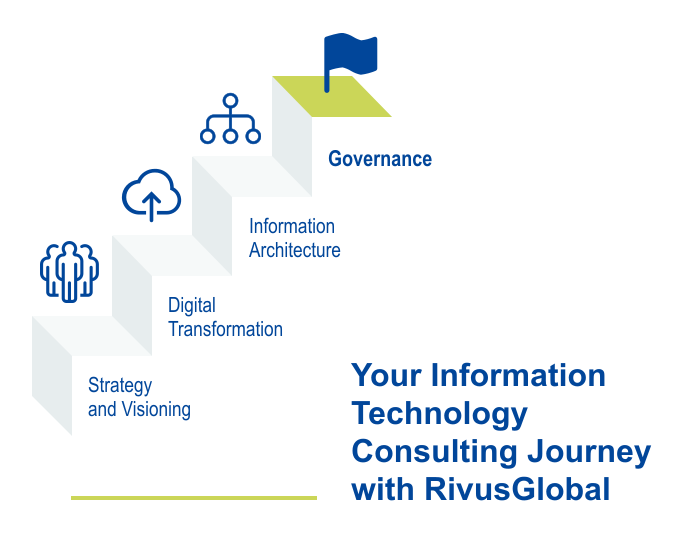
Our IT consulting services are organized into four core areas that work together or stand alone. Start where clarity is missing most - then expand as priorities evolve. Each practice is designed to create forward motion now, while building a stronger foundation for what’s next.
Align leaders on outcomes and build a roadmap teams can actually run.
Learn MoreModernize platforms and workflows to improve agility, resilience, and experience.
Learn MoreMake information easier to find, trust, protect, and govern at scale.
Learn MoreClarify decision rights and standards so IT stays aligned, secure, and accountable.
Learn MoreSome teams need a strategic reset. Others need to untangle architecture, strengthen governance, or lead a transformation program without disruption. Wherever you start, you get senior expertise and practical delivery support - plus knowledge transfer so your organization can sustain the results.
Explore each service area to see the outcomes, approach, and what “good” looks like, so you can move forward with clarity and momentum.
Organizations that are growing, modernizing, or consolidating systems and need decisions made with confidence. We often support small and mid-sized teams that need senior-level guidance without expanding headcount.
No. We translate complex options into clear trade-offs and business impact, so stakeholders can make decisions quickly and defend them.
We start with discovery to understand goals, constraints, and the current environment. Then we deliver a practical roadmap with priorities, sequencing, and quick wins. From there, we can support implementation and ongoing optimization.
It’s aligning leaders on what technology needs to enable, then turning that into a roadmap: initiatives, sequencing, investment levels, and success metrics. It creates focus and prevents costly detours.
Yes. Each service area is modular, and many clients start with one and expand once the foundation is in place.
Digital transformation modernizes how an organization operates by improving processes, data flow, and technology. Done well, it reduces friction, improves visibility, and increases resilience as the business scales.
It depends on scope. Targeted initiatives can deliver results in a few months; larger programs are typically delivered in phases over 12-36 months. We plan for early value, not a long "big bang."
Adoption is part of delivery, not an add-on. That means stakeholder involvement, communication, training, and feedback loops built into the rollout.
Costs vary based on complexity and current systems. We help define a phased plan and budget tied to ROI, prioritizing initiatives that move the needle first.
Information architecture is the blueprint for how content and data are organized, labeled, stored, and retrieved across systems. It improves findability and integration, and reduces risk by making information manageable throughout its lifecycle.
Governance keeps the gains from slipping. It sets standards, decision rights, and accountability so systems stay secure, compliant, and aligned as needs evolve.
We'll map a practical, phased plan. Quick wins first, momentum that compounds.