
04
Disconnected systems slow teams down. Data gets re-entered, approvals stall, and reporting becomes a manual effort.
RivusGlobal brings application development, automation, data integration, business intelligence, and process outsourcing together to remove that friction. The result is software that fits real workflows, information teams can trust, and operations that scale without added complexity.
From modernizing legacy applications to building dashboards and streamlining operational work, these services create clearer visibility and faster delivery across the organization.
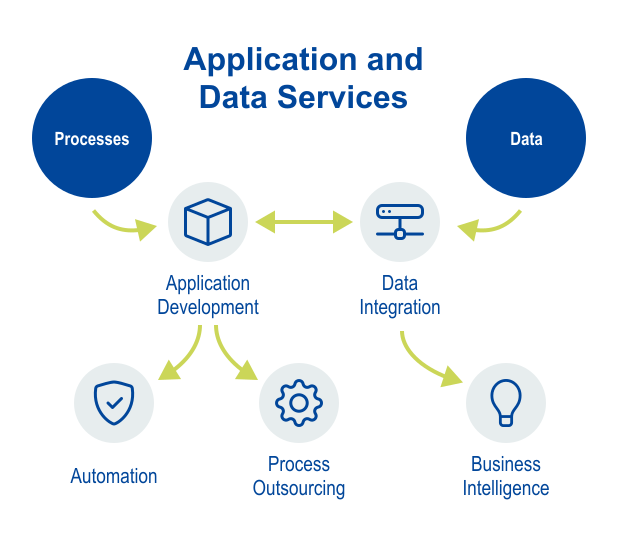
Application & Data Services combine five capabilities into one foundation: Application Development, AI and Automation, Data Integration, Business Intelligence, and Process Outsourcing.
Together they remove manual handoffs, connect systems, and turn data into clear reporting and insight. The result is smoother operations, faster delivery, and a business that can scale with confidence.
Custom applications and modernization built around real workflows. Secure, scalable, and designed for adoption.
Learn MoreAutomate repetitive, rule-based work across departments. Reduce errors, speed up cycles, and give teams time back.
Learn MoreConnect systems and data sources into one reliable view. Real time visibility, fewer silos, and reporting everyone can trust.
Learn MoreDashboards, reporting, and analytics that turn data into action. Clear insight for leaders and teams.
Learn MoreOffload critical operational work without losing control. Defined service levels, consistent delivery, and scalable capacity.
Learn MoreCustom web, mobile, and enterprise applications, plus legacy modernization. Common builds include portals, internal tools, workflow platforms, and line‑of‑business systems.
Yes. We integrate with databases, APIs, identity providers, and third‑party platforms so your application fits your ecosystem instead of creating another silo.
Automation reduces manual work, shortens cycle times, improves accuracy, and frees teams for higher-value initiatives.
Repetitive, rule-based, high-volume tasks are best. Common targets include finance, HR, operations approvals, reporting, and system-to-system handoffs.
Data integration brings information from multiple systems into a consistent, usable format. It reduces silos, improves reporting, and supports faster, more reliable decisions.
Yes. Cloud, on-premises, and hybrid environments are supported, with the right tooling and governance for the data involved.
BI turns data into insight through dashboards, reports, and analytics, helping teams see performance, trends, and opportunities in real time.
Executive dashboards, operational KPIs, financial reporting, compliance views, and department-level reporting. Outputs can be real time or scheduled.
Security is built in through encryption, access controls, least privilege permissions, and compliance-aligned practices across integration, storage, and reporting.
Common functions we've taken on include business administration, board governance, finance and accounting, contract/project management, customer support, data-entry, and other process-heavy operational work.
Clear service levels, documented processes, QA checks, and ongoing performance reviews, with transparent reporting and escalation paths.
Yes. Services can scale by volume, coverage, or hours as needs change, without the overhead of additional full-time hiring.
Many projects land in a 3 to 6 month range depending on scope and complexity, delivered through agile, incremental releases.
Yes. Automation is designed around existing workflows, approvals, and systems, then refined with stakeholder feedback to drive adoption.
Support can include monitoring, updates, optimization, and incident response, focused on stability today and continuous improvement over time.
We'll map a practical, phased plan. Quick wins first, momentum that compounds.